
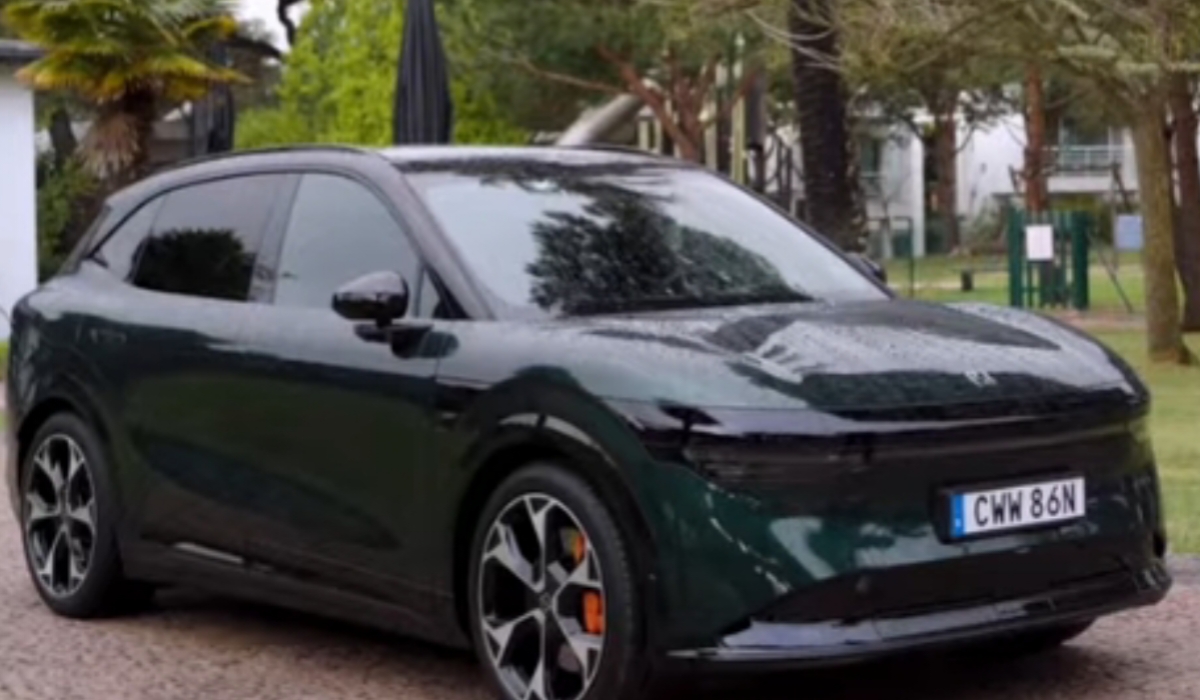
Introduction
The electric vehicle (EV) landscape is evolving rapidly, with manufacturers introducing innovative technologies to meet consumer demand for efficient, affordable, and high-performance cars. One such exciting new contender is the Excelantics EV, a relatively unknown electric SUV from Exceed, a luxury sub-brand of the Chinese automaker Chery. In this comprehensive review, we dive into the performance of this electric vehicle, focusing on key areas such as range, charging speed, road noise, and driving comfort. Let’s explore how this cutting-edge EV stacks up against the competition in 2025.Excelantics EV Range Test
Key Features of the Excelantics EV
The Excelantics EV is a midsize to large electric SUV, boasting a sleek design and an array of features typically seen in higher-end luxury vehicles. The vehicle comes equipped with air suspension, making for a comfortable ride, and offers an interior that’s a blend of luxury and practicality. The unique combination of light-colored materials, including velour and wetsuit-like textures, gives it a distinct luxury feel that sets it apart from both European and American vehicles.
Despite being a newcomer to Europe, Exceed has established itself as a force to be reckoned with globally, being the fifth-largest auto manufacturer in China. The Excelantics EV is their foray into the European market, and the pricing for this model is incredibly competitive, especially for a vehicle packed with high-end features.
Range Test Results at 120 km/h
We began our test by assessing the Excelantics EV’s range at a cruising speed of 120 km/h on a motorway. The conditions were not ideal, as it was a chilly 11–12°C, and there was a light headwind. However, these real-world conditions provide a more accurate reflection of how the car would perform on typical journeys.
After 30 minutes on the road, covering 60 km, the vehicle’s average consumption was 22.4 kWh per 100 km. While not the most efficient result, it’s important to consider the Excelantics EV’s size, battery capacity, and price point. Compared to some competitors, this consumption rate is higher than expected, but this is balanced by the car’s affordable price of under €50,000 for a fully loaded version.
Testing the Charge Speed and Charging Time
One of the most exciting features of the Excelantics EV is its charging capabilities. This model is equipped with CL’s new 5C battery technology, enabling rapid charging speeds. While the car supports a 420 kW peak charge rate, most charging stations max out at 350 kW, though some 400 kW chargers are available.
At our charging station, we saw the charging speed rapidly climb from 200 kW to a peak of 392 kW at 14% state of charge. This is impressive for a 77 kWh battery pack, especially considering the ambient temperature was between 11–13°C.
- 8–60% charge: 7.5 minutes
- 8–70% charge: 9 minutes
- 10–80% charge (claimed): 11 minutes
This fast-charging capability is a game-changer, making the Excelantics EV one of the fastest-charging vehicles in its class.
Road Noise Test

As part of our testing, we measured the road noise at various speeds using calibrated equipment. At 120 km/h, the car produced an average of 67.25 dB, which was relatively quiet, though not class-leading.
The Excelantics EV performs well here, though the Zeer 7X seemed slightly quieter in previous tests. We also noted some wind buffeting from the large side mirrors and a high-pitched whine from the rear electric motor above 100 km/h. These sounds were only prominent during silent driving and were negligible with music or conversation.
Performance and Handling
On the road, the Excelantics EV delivers a smooth and quiet driving experience. It is comfortable to drive, with responsive adaptive cruise control and active braking when detecting turns or road curvature.
While these advanced driver assistance systems (ADAS) are functional, they lack the finesse seen in European vehicles. Nonetheless, the driving feel is confident, and the air suspension contributes to a premium ride. The interior space also makes it a great choice for families or long trips.
Comparison with Other EVs
Compared to well-known rivals like Tesla Model Y Long Range and Skoda Enyaq 85X, the Excelantics EV comes up short in range. In our 120 km/h test, it achieved 293 km of range.
However, it compensates with faster charging, a more spacious cabin, and a more affordable price point. For many buyers, these advantages outweigh the shorter range — especially with today’s growing fast-charger network.
Conclusion
In conclusion, the Excelantics EV stands out in terms of charging speed, offering some of the fastest charging times in its class. At under €50,000, it delivers exceptional value with luxury features, quick acceleration, and a smooth ride.
While its range is modest, the ultra-fast charging more than makes up for it — especially for users with access to high-speed chargers. The Excelantics EV is a serious contender in the 2025 EV market, combining performance, comfort, and technology at a price few competitors can match.
Key Specifications
| Specification | Details |
|---|---|
| Model | Excelantics EV |
| Battery Capacity | 74.8 kWh usable |
| Charging Speed | 420 kW peak (tested at 392 kW) |
| Range (120 km/h) | 293 km |
| Acceleration | 0–100 km/h in ~5.5 seconds |
| Road Noise (120 km/h) | 67.25 dB |
| Price (Norway) | From €46,000 |
What Do You Think?
Let us know in the comments: What do you think about the Excelantics EV? Is the 5C charging technology enough to make up for the shorter range? Would you choose fast charging over a longer driving range? We’d love to hear

Md Imran Rahimi is the founder and main author of TechScopeHub.in. He is passionate about technology, gadgets, and automobiles, and loves to share simple yet valuable insights with readers. With a focus on honest reviews and clear comparisons, Imran’s goal is to make technology easy and useful for everyone.”