
Introduction: Why the Ariya Matters in 2026
Nissan’s EV ambitions have been visible for years, and the Ariya represents a major step: a purpose-built electric platform matched to a distinctly modern, premium cabin. For buyers in Australia, the Ariya is important because it marks Nissan’s renewed EV push with a car that blends Japanese minimalism with technology-forward touches. The Evolve e-4ORCE model brings dual motors, a large battery pack, and high-spec equipment — but as you’ll read, not every box is ticked perfectly.
Exterior Design: Bold, Different, and Attention-Grabbing
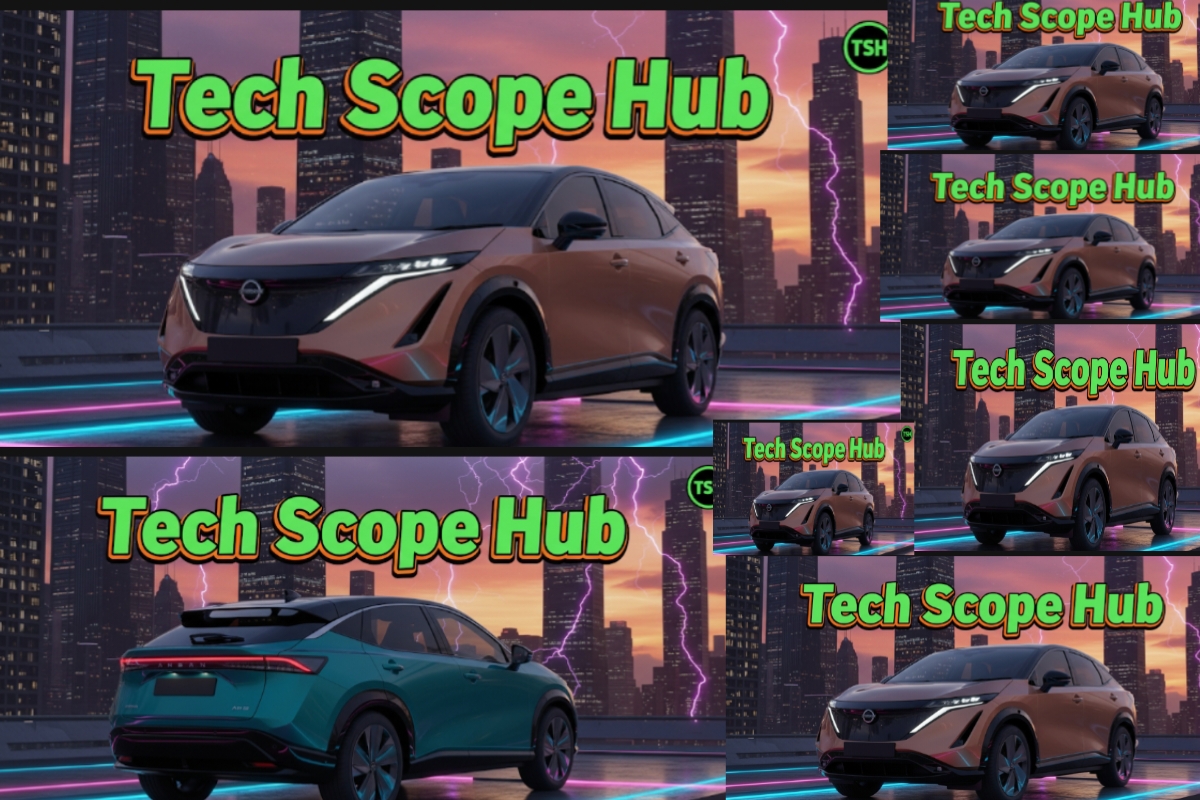
The Ariya’s exterior is one of its strongest assets. It departs from Nissan’s older design language with a clean, aerodynamic silhouette, a connected LED light bar front and rear, and a coupe-like roofline that helps it stand out in traffic. The model we tested wore 20-inch alloy wheels wrapped in Dunlop SP Sport Maxx tires; visually striking, these wheels also influence ride and noise.
Notable design features
- Low, blacked-out grille area with a refreshed Nissan emblem.
- Full-width LED light bars front and rear for a modern signature.
- Piano-black trim on wheel arches and mirrors — glossy but prone to swirl marks.
- Subtle aerodynamic details and a coupe-style rear roofline.
The styling is a clear win if you want a car that doesn’t look like every other compact SUV on the road. That said, the piano-black accents — while premium in photos — may show wear quicker than painted surfaces in everyday use.
Interior & Cabin Quality: Premium Feel With Practical Trade-Offs
Step inside and the Ariya aims for a near-luxury feel. Soft suede-like inserts, wood-texture trim, two joined 12.3-inch screens and a sliding center console all present a high-end environment. The cabin layout is modern and pleasant, and many of the touchpoints are soft to the touch.
What works well
- Dual 12.3-inch displays (infotainment + driver cluster) create a cohesive cockpit feel.
- Premium materials — suede, soft plastics, and wood-effect panels — lift perceived quality.
- Excellent front seat comfort with heating and ventilation; heated steering wheel and heated windscreen are useful in cooler conditions.
- Panoramic glass roof brightens the cabin and adds a sense of space.
Where practicality suffers
Despite the impressive finishes, the Ariya has some clear packaging compromises. The sliding centre console looks clever but eats into usable storage: the main console bin is surprisingly small because the sliding mechanism prioritizes movement over capacity. Cup holders and small-item trays are present, but overall there’s less usable daytime storage than you might expect in a family-orientated SUV.
Infotainment & Connectivity: Attractive Screens, Slight Usability Issues

The Ariya’s twin 12.3-inch displays are a highlight. The main system includes built-in navigation, wireless Apple CarPlay and Android Auto, and a 10-speaker Bose sound system on higher trims. However, the haptic touch buttons and screen sensitivity can be inconsistent: light brushes sometimes trigger functions unexpectedly, and there’s a perceptible gap between finger touch and response, which takes some getting used to.
| Feature | Details |
|---|---|
| Driver & center screens | Dual 12.3-inch displays |
| Navigation | Built-in GPS with 3D maps |
| Smartphone | Wireless Apple CarPlay & Android Auto |
| Audio | 10-speaker Bose system (top trims) |
| Cameras | 360° surround view (notably low resolution at night) |
Practicality & Cargo Space: Competent Comfort, Underwhelming Storage
Cargo capacity sits around the 468–500 litre mark depending on spec and measurements — adequate for daily needs but not exceptional in the segment. Under-floor storage is limited (occupied by a 12V battery and a subwoofer in our test car), and there’s no spare wheel — a tyre repair kit is provided instead.
Boot & cabin storage summary
- Boot volume: ~468–500 L (approx).
- Underfloor compartment: minimal usable room.
- Center console: limited capacity due to sliding mechanism.
- Rear passengers: heated seats, USB-C outlets and decent legroom.
Powertrain & Performance: Strong Acceleration, Average Efficiency
The Evolve e-4ORCE model uses a twin-motor setup (one motor per axle), delivering a responsive, all-wheel-drive experience. Each motor produces around 160 kW for a combined output that provides brisk acceleration and secure traction.
| Specification | Value |
|---|---|
| Power output | ~320 kW combined (160 kW front + 160 kW rear) |
| Torque | ~600 Nm (combined) |
| Battery | ~90 kWh lithium-ion |
| 0–100 km/h | ~5.0 seconds (manufacturer claim) |
| Top speed | ~200 km/h (limited) |
While acceleration is satisfying — with strong mid-range punch and a reassuring kick when you floor the throttle — energy consumption is higher than class leaders. Real-world driving during mixed highway runs returned consumption north of 20 kWh/100 km, reducing realistic range to roughly 350–400 km on a full charge under heavier use, compared to the WLTP figure near 450 km.
Also Read https://techscopehub.in/2026-audi-a8-d4-review/
Ride & Handling: Tuned for Character, Not Absolute Refinement
The Ariya’s suspension tuning is a curious blend: firm on town surfaces yet floaty in dynamic cornering. It appears Nissan prioritized a balance that keeps body roll in check while retaining comfort — but the result is a ride that can feel unsettled on certain surfaces. On composed highways the car is stable and confidence-inspiring; around town the firm spring rates make for a busier ride over small imperfections.
Drive modes
- Eco: prioritizes efficiency and softer throttle response.
- Standard: default everyday balance between comfort and response.
- Sport: firmer steering, sharper throttle mapping.
- Snow: traction-focused settings for slippery conditions.
Charging & Battery: Very Good AC, Mediocre DC
Charging is a mixed bag for Australian buyers. The Ariya supports a strong 22 kW AC (3-phase) rate on higher trims, which is a practical advantage for owners with access to faster AC charging at home or work. However, maximum DC fast charging peaks around 130 kW, with average real-world charging closer to ~110 kW — notably slower than several rivals that support higher peak DC rates.
| Charge type | Power | Typical time |
|---|---|---|
| AC (3-phase) | 22 kW | ~4–5 hours (0–100%) |
| DC fast charge | ~130 kW peak | ~35–40 min (10–80%) |
| Charge port location | Front-mounted | Can be awkward at some public stations |
If you regularly rely on rapid DC charging and want the fastest top-ups, the Ariya will feel slower to recharge than some newer EVs. If, however, you mainly charge at home and value a fast AC option, the Ariya’s 22 kW support is a strong point.
Safety & Driver Assistance: Well-Equipped But Not Flawless

Nissan packs the Ariya with its Safety Shield suite: adaptive cruise control, lane keep assist, automatic emergency braking, blind spot monitoring and more. In our semi-autonomous testing the system held lanes well but could be slow to activate in some outer lanes. The 360° camera system is helpful, but the low-resolution feed, especially at night, is a surprising weak point on a top-spec car.
Key safety items
- Adaptive cruise control and lane centring
- Autonomous emergency braking and pedestrian detection
- Blind-spot monitoring & rear cross-traffic alert
- 360° surround camera (image quality could be improved)
Real-World Driving Impressions
On the road the Ariya feels quick and stable with predictable handling once it settles into a corner. Road noise from the sporty 20-inch tyre setup is noticeable inside the cabin, and the firm town ride will be polarising: some drivers will appreciate the planted feel, others will miss the plush comfort of rivals. The digital rear-view mirror is genuinely useful in daily driving and improves visibility over a conventional mirror.
Price & Ownership: Value Questions to Consider

With the top-spec Evolve e-4ORCE near AUD $72k and the range starting around AUD $56k, the Ariya sits firmly in the mainstream premium EV bracket. Buyers should weigh real-world energy usage, likely running costs, and battery charging behaviour when calculating total cost of ownership. Higher-than-average electricity consumption will increase running costs relative to more efficient rivals.
Pros & Cons — Quick Summary
- ✅ Distinctive, modern design that stands out on the road.
- ✅ High-quality materials and a premium-feeling cabin.
- ✅ Strong dual-motor performance and confident all-wheel drive.
- ✅ Useful 22 kW AC charging support for daily convenience.
- ✅ Wireless Apple CarPlay & Android Auto plus Bose audio on high trims.
- ❌ Higher energy consumption (~20 kWh/100 km in testing) reduces realistic range.
- ❌ Limited practical storage because of the sliding centre console packaging.
- ❌ Ride tuning can feel firm and occasionally floaty — not perfectly resolved.
- ❌ DC fast charging maxes at ~130 kW peak which is slower than some rivals.
- ❌ 360° camera low resolution hurts night-time visibility and parking confidence.
Verdict: Who Should Buy the Ariya in 2026?
The 2026 Nissan Ariya Evolve e-4ORCE is a compelling option for buyers who prioritise design, a premium interior and confident all-wheel drive performance. If you mainly charge at home (and can use the 22 kW AC capability) and appreciate a car that looks and feels special, the Ariya is worth considering. But if maximum range efficiency, fastest DC charging or class-leading cargo flexibility are your top priorities, rivals like the Tesla Model Y or Hyundai Ioniq 5 deserve a close look.
Final thoughts
Nissan has delivered a stylish, well-appointed electric SUV that brings Japanese design and technology to the mainstream Australian market in 2026. It is not without compromises: real-world efficiency, storage packaging and DC charging speed are areas where rivals hold an advantage. Still, for shoppers after a premium-feeling EV with strong performance and a distinctive presence on the road, the Ariya makes a persuasive case — as long as you accept those trade-offs.

Md Imran Rahimi is the founder and main author of TechScopeHub.in. He is passionate about technology, gadgets, and automobiles, and loves to share simple yet valuable insights with readers. With a focus on honest reviews and clear comparisons, Imran’s goal is to make technology easy and useful for everyone.”