
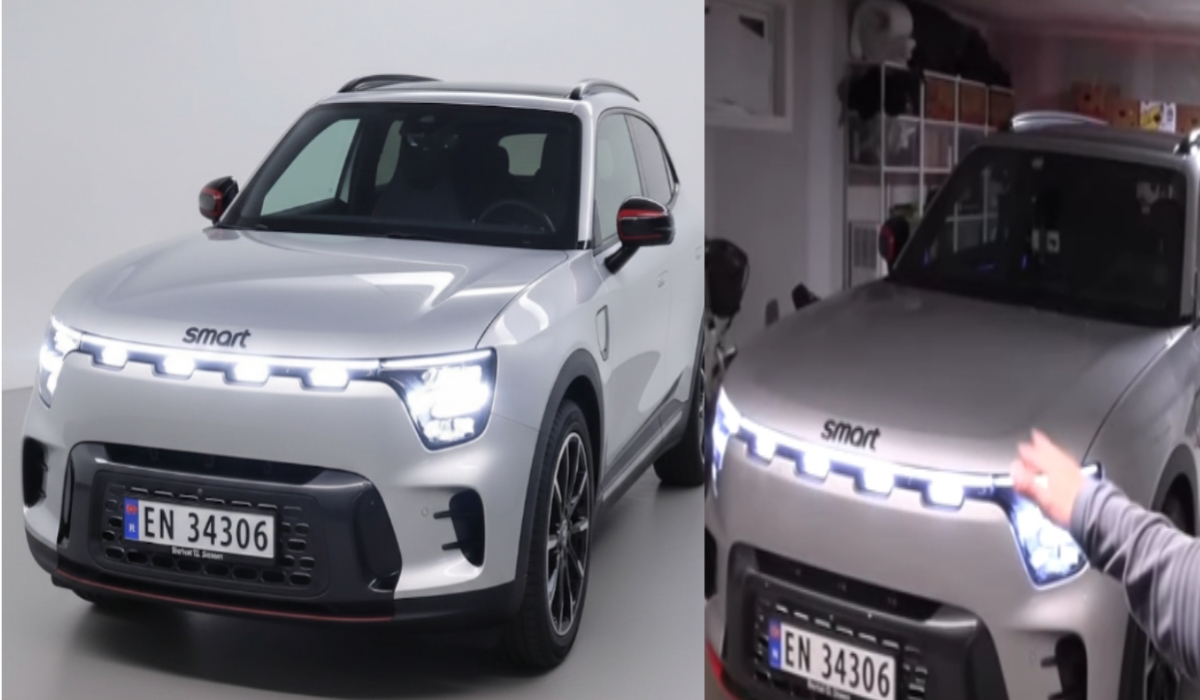
The ultimate test for any modern electric vehicle isn’t just its range on a single charge, but its ability to devour long distances with minimal downtime. The “1000km Challenge” is the perfect barometer for this, measuring the total time it takes to cover 621 miles, including all charging stops. In 2025, with charging technology advancing rapidly, the bar is set higher than ever.
We decided to put one of the market’s most powerful and technologically advanced electric SUVs to the test. Boasting a staggering 646 horsepower and a battery pack shared with one of the previous record-holders, this vehicle promised thrilling performance. However, with a boxy, less aerodynamic design and colder weather conditions, its efficiency was a known question mark. Could raw power and ultra-fast charging overcome a thirst for electrons? We were about to find out.The 1000km EV Challenge Testing a High Performance Electric SUV’s Speed & Stamina
Pre-Challenge Preparations: Strategy is Key

Any successful long-distance run in an EV hinges on strategy. Our previous experiences taught us that not all fast-chargers are created equal. We discovered that certain 350kW chargers had been software-limited to around 270kW, a significant bottleneck. Our plan was to seek out the more powerful 400kW-capable chargers, which this SUV can leverage, charging at speeds of up to 400kW.
Before setting off on a Saturday night, we charged the vehicle to 100%. The cabin offered a surprising amount of space, with excellent legroom even in the back, making it a comfortable cruiser for the long haul. With the navigation set, the car’s system predicted we would reach our first charging stop with 7% state of charge. The challenge was on.
Leg 1: The Thrill of Power and the First Charging Hurdle
The start time was 9:13 PM. Almost immediately, the car’s performance credentials were apparent. The acceleration was brutal and instantaneous, a true testament to its 646 horsepower. It’s a feeling that never gets old, transforming any on-ramp into a launchpad.
Our first planned stop was at a charging station known for its 400kW capabilities. This was a critical part of our strategy to minimize charging time. However, we encountered our first mystery. Despite the charger’s potential, the charging speed fluctuated and plateaued around 340kW, not the full 400kW we expected. Even more frustrating, the session failed multiple times, forcing us to switch stalls and costing precious minutes.
This highlighted an often-overlooked aspect of EV road trips: the inconsistency of charging infrastructure. Even with a capable vehicle and a powerful charger, technical glitches can disrupt the best-laid plans.
After several attempts, the charging stabilized, though not at the peak rate we hoped for. We charged to 81%, fueled ourselves with a quick meal, and got back on the road, determined to make up for lost time.
On the Road: Impressions of Comfort and a Thirst for Energy
Back at highway speeds, the SUV impressed with its refined cabin. On smooth asphalt, road noise was remarkably low, a credit to its soundproofing and the specific winter tires fitted. However, on rougher concrete surfaces, a noticeable rumble emerged, though it remained well-contained.
The most significant observation, however, was the energy consumption. The display showed numbers soaring above 300 Wh/km, and at times even touching 384 Wh/km. This was substantially higher—almost 40-50% more—than more aerodynamic competitors like the Tesla Model Y. The vehicle’s powerful drivetrain and less sleek shape were clearly taking a toll on efficiency.
A unique characteristic we noted was a distinct wind noise phenomenon when overtaking large trucks. As the vehicles passed each other, a specific buffeting sound would occur, lasting longer at lower overtaking speeds. It was a minor but interesting quirk not commonly experienced in other EVs.
Leg 2: A High-Speed Charge and an Unforeseen Obstacle
Our second charging stop was at a different network, featuring new 400kW chargers. This session was far more successful, providing a consistent and blistering charge of around 346 kW. The charging curve was impressive, holding this high power for a significant portion of the session. In just about 16 minutes, we had enough energy to continue, demonstrating the game-changing potential of reliable, high-power charging.
The drive continued smoothly until we encountered a major, unexpected delay. A group of individuals had blocked the main motorway for an illegal street race, lighting fireworks and creating a dangerous situation. Traffic was at a complete standstill for over ten minutes until police arrived. This incident served as a stark reminder that real-world challenges often include variables no amount of planning can control.
The Final Stretch: Maximizing Charge and Driver Fatigue
As dawn approached, driver fatigue became a real factor. Safety is paramount, so we took a scheduled 15-minute power nap at a rest stop. This short break is a highly recommended strategy for any long-distance driver, proving far safer than pushing through exhaustion.
The final charging stop utilized a high-power truck charger. Here, we saw speeds climb to 351 kW. While the vehicle is capable of accepting more, the charger’s 500-amp limit was the constraining factor. This is a common theme; the vehicle’s charging potential is often limited by the infrastructure’s current output. To minimize the number of stops for the final leg, we opted for a longer charge, taking the battery to around 85%.
The interior of the SUV, with its ambient lighting and futuristic design, made the late-night drive more pleasant. Features like a cooled wireless charging pad and well-placed cup holders added to the convenience, making it feel like a command center for a high-tech mission.
The Verdict: 9 Hours and 20 Minutes
After navigating through a temporary speed reduction zone and a final energy-conscious drive, the odometer finally ticked over to the 1000km mark. The total time? 9 hours and 20 minutes.
This result was 25 minutes slower than the time set by a more efficient model we tested previously.
Analysis of the Results
| Factor | Impact on Time |
|---|---|
| High Energy Consumption | Primary Factor. The high Wh/km rate meant more energy was used per kilometer, necessitating more frequent or longer charging stops. |
| Charging Infrastructure Issues | Significant Delay. The initial charging problems, including failed sessions and lower-than-expected speeds, cost several minutes. |
| Unforeseen Road Closure | Major Delay. The 10+ minute stoppage due to the illegal street race was a significant and unlucky setback. |
| Weather & Aerodynamics | Contributing Factor. Colder temperatures and the vehicle’s boxy design inherently reduced efficiency. |
| Vehicle’s Charging Capability | Positive Factor. When the chargers worked correctly, the SUV’s ability to sustain 350kW charging was a major time-saver. |
Conclusion: A Lesson in the Balance of Power and Efficiency
The 1000km challenge with this high-performance electric SUV was a revealing experiment. It conclusively demonstrated that brute power and ultra-fast charging are only one part of the long-distance equation. The vehicle is an incredible technical achievement, offering spine-tingling acceleration and a luxurious, comfortable cabin.
However, its high energy consumption was the defining characteristic of the run. In the 2025 EV landscape, efficiency is becoming just as important as charging speed. This challenge proved that an EV with slightly less power but significantly better efficiency can ultimately cover the same distance in a shorter total time, with less reliance on a perfect charging network.
For those who value breathtaking performance and are willing to trade off some efficiency for it, this SUV remains a compelling package. But for the ultimate long-distance road trip machine, the ideal candidate must strike a delicate balance between the thrill of the accelerator and the wisdom of sipping power wisely. The quest for the perfect electric grand tourer continues.

Md Imran Rahimi is the founder and main author of TechScopeHub.in. He is passionate about technology, gadgets, and automobiles, and loves to share simple yet valuable insights with readers. With a focus on honest reviews and clear comparisons, Imran’s goal is to make technology easy and useful for everyone.”